Destination guide
Paris: where we'd stay, what we'd do, and what it costs
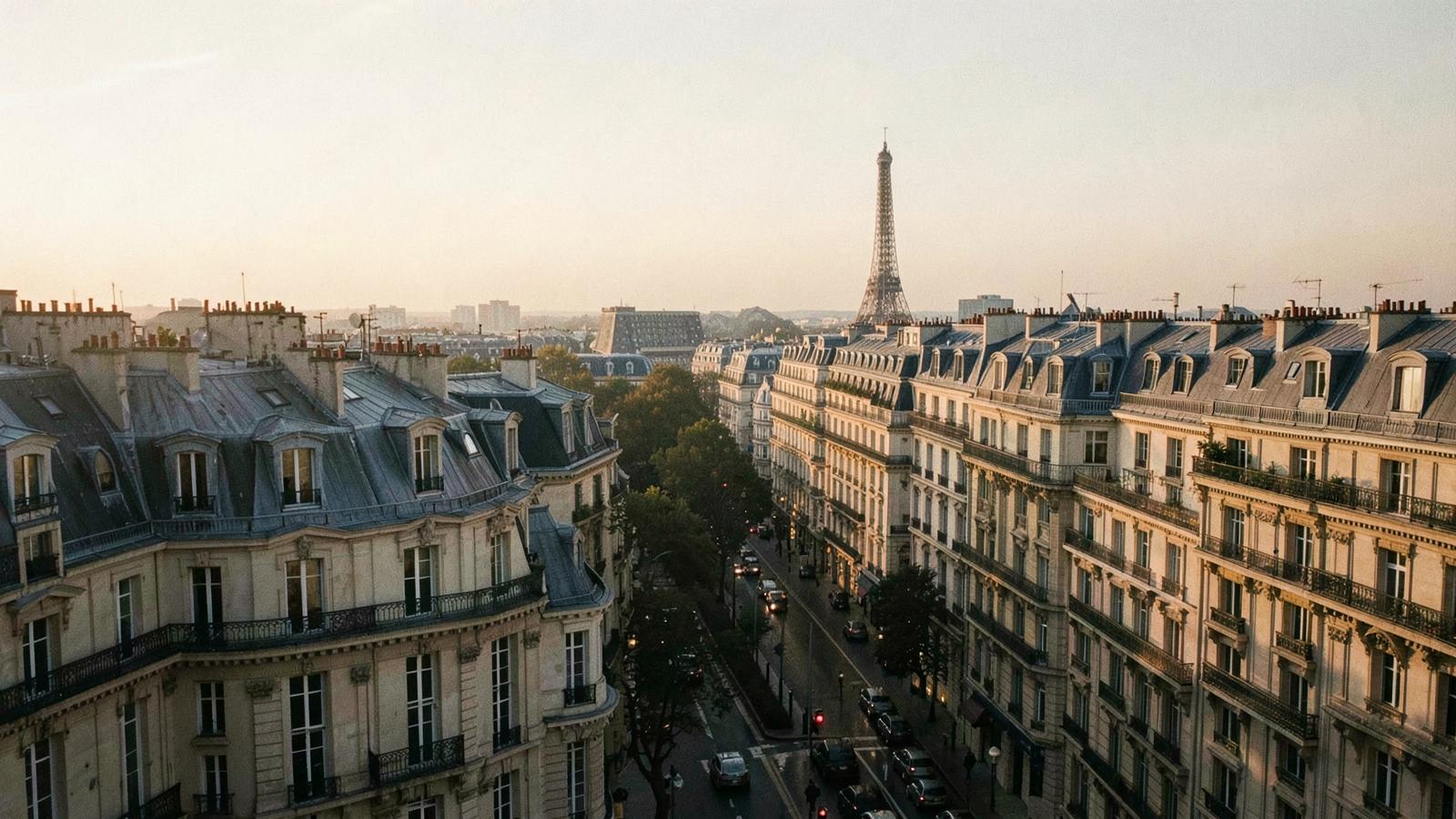
Most Paris advice fails in the same way: it hands you a list of forty things and leaves the hard part — where to sleep, in what order to do things, and how much of the day the metro will eat — entirely to you.
This guide takes the opposite approach. It makes choices. Where those choices depend on your dates, budget or taste, it says so rather than pretending there's one right answer.
Who Paris suits
Paris is unusually forgiving for a first big European trip. It is dense, walkable, extremely well served by public transport, and the things people come for are concentrated in a small central core. You do not need a car, and you do not need to be an early riser to get value out of a day.
It suits couples, solo travellers and anyone who likes to walk. It is harder work with small children than a beach or a smaller city — distances between the famous sights are longer than they look on a map, and museums are big. It also rewards people willing to eat late; the city's rhythm runs later than most North American ones.
Where we'd stay
Location matters more in Paris than hotel quality, because the difference between a central base and a cheap one on the edge is roughly an hour of your day, every day.
A rule that holds up: anywhere inside arrondissements 1 to 8, plus the 11th, puts you within about 25 minutes of nearly everything on this page. Outside that, check the metro line before you book — the walk to the station is often the part that hurts.
Le Marais (3rd/4th)
Our default for a first tripCentral, beautiful, walkable to Notre-Dame, the Seine and the Pompidou, and full of places to eat late. Good metro coverage in several directions. Prices are above average but you spend less time and money getting anywhere.
Saint-Germain-des-Prés (6th)
Quieter, more classicThe Left Bank version of the same argument: cafés, bookshops, the Luxembourg Gardens on your doorstep, and an easy walk to the Louvre and the Musée d'Orsay. Calmer at night than the Marais.
Canal Saint-Martin (10th/11th)
Better value, more localCheaper, younger, strong for food and bars, and still only a short metro ride from the centre. Worth it if you'd rather spend money on eating than on address.
Around Gare du Nord
Convenient, not charmingMakes sense if you're arriving by Eurostar or hopping onwards by train. It is a transport hub, not a neighbourhood you'll want to spend evenings in.
The attractions worth the queue
Paris has hundreds of sights. These are the ones that reliably justify the time.
Notre-Dame de Paris
Île de la CitéThe Gothic cathedral at the literal centre of the city, reopened after the 2019 fire and its restoration. Entry to the nave is free; expect a queue at peak hours and go early or late. Even from the outside, the square and the walk around the back to the flying buttresses is worth doing.
Palais Garnier
9th arrondissementThe 19th-century opera house, and the most extravagant interior in Paris that you can simply buy a daytime ticket to see. The grand staircase and the Chagall ceiling are the reason to go. If you can get a performance ticket instead, do that.
The Louvre
1st arrondissementEnormous, and best treated as two hours in one or two wings rather than an attempt at the whole thing. Book a timed slot. If your interest is Impressionism rather than antiquity, the Musée d'Orsay across the river is the better museum for you.
The Champs-Élysées and the Arc de Triomphe
8th arrondissementThe avenue itself is a wide commercial boulevard rather than a charming street — the point is the walk. Start at the Arc de Triomphe, walk down towards Place de la Concorde, and continue into the Tuileries. Roughly 40 minutes at a stroll, and it stitches half the city together.
The Eiffel Tower
7th arrondissementGoing up is optional; seeing it is not. Champ de Mars for the classic view, Trocadéro for the photograph, and the Pont de Bir-Hakeim if you'd rather avoid crowds. On the hour after dark it sparkles for five minutes.
Montmartre and Sacré-Cœur
18th arrondissementHilly, touristy at the summit and genuinely lovely in the back streets. Go in the morning, skip the portrait painters in Place du Tertre, and walk down the quiet eastern side.
Eating and drinking
The practical rule in Paris is timing, not price. Lunch service typically runs roughly noon to 2pm and dinner from about 7:30pm; between those, most kitchens are closed and you're choosing between cafés and bakeries. A midday formule — a set two-course lunch — is usually the cheapest way to eat well.
Book anywhere you actually care about, ideally a few days ahead. Walk-ins work best before 8pm. For a low-effort excellent meal, a neighbourhood bistro two or three streets off a main square almost always beats the one on it.
- Bakeries for breakfast, not hotels — a hotel breakfast is often €20 or more for something you can buy better downstairs.
- Markets (most neighbourhoods have one on set mornings) are the cheapest good lunch in the city.
- Tap water is free and safe: ask for une carafe d'eau.
- Service is included in the bill; rounding up is normal, 20% is not expected.
Nightlife
Paris nightlife is bar-led rather than club-led. The 11th around Rue Oberkampf, the Canal Saint-Martin, and the Bastille area are the reliable clusters; Saint-Germain and the Marais are better for a quieter drink. Wine bars generally serve food late, which is useful when dinner ran long.
The metro stops running around 1am on weeknights and roughly 2am on Friday and Saturday, with night buses after that. That closing time shapes the end of the evening more than anything else, so plan the last leg home before you commit to a far-flung last stop.
Getting around
- The metro is the default: fast, dense, and rarely more than a few minutes' walk from anywhere central. Buy a rechargeable card or use a phone pass rather than paper singles.
- Central Paris is more walkable than it looks — many neighbouring metro stops are five minutes apart on foot.
- RER B connects Charles de Gaulle to the centre in around 35 minutes; taxis have a fixed fare to central Paris and take longer in traffic.
- Orly is closer, with the Orlyval light rail connecting onto RER B.
- Rideshare and taxis are widely available; cycling is viable on the growing protected-lane network, less so on the big boulevards.
An example three days
One version of Paris, grouped so you're not crossing the city twice in a day. Wayfare builds a version around your dates, pace and interests.
Day 1
The islands and the Marais
Everything is walkable from everything else, which is the gentlest possible first day after travelling.
Morning
Notre-Dame and Île de la Cité
Go early for the shortest queue, then walk the length of the island.
Midday
Lunch in the Marais
Set-menu lunch two streets off the main drag.
Afternoon
Place des Vosges and the back streets
The oldest planned square in Paris, then wander north.
Evening
Dinner and a drink nearby
Stay local — day one is not the day to cross town.
Day 2
Museums and the grand axis
One big museum in the morning while you're fresh, then a long walk that covers the postcard Paris in a single line.
Morning
The Louvre or the Musée d'Orsay
Timed entry, two hours, one or two wings.
Midday
Lunch in the Tuileries or Saint-Germain
Afternoon
Concorde to the Arc de Triomphe
Walk the Champs-Élysées the whole way; it's about 40 minutes.
Evening
Eiffel Tower after dark
Champ de Mars for the sparkle on the hour.
Day 3
Montmartre and the opera house
The hill in the morning while it's quiet, then downhill into the 9th rather than doubling back.
Morning
Montmartre and Sacré-Cœur
Midday
Lunch in the 9th on the way down
Afternoon
Palais Garnier
Daytime visit, or a performance if the schedule allows.
Evening
Wine bar in the 11th
Check the last metro before settling in.
What Paris costs
Rough, current-season ranges for planning only — not live prices. Wayfare checks real pricing for your dates when it plans your trip.
| Mid-range hotel, per nightCentral arrondissements; less in the 10th/11th, more in the 6th/7th. | €150–260 |
|---|---|
| Apartment rental, per nightBetter value for groups of three or more. | €120–220 |
| Lunch formuleTwo courses at a neighbourhood bistro. | €16–25 |
| Dinner, mid-rangePer person, before wine. | €30–55 |
| Museum entryMany national museums are free on the first Sunday of the month. | €12–22 |
| Metro travel, per dayCheaper with a multi-day pass if you ride more than three times a day. | €6–12 |
If this version isn't yours
- On a tighter budget: base yourself in the 10th or 11th, eat lunch as your main meal, and lean on free entry days rather than paid museums.
- With children: shorten the walks, swap the Louvre for the Jardin des Plantes and its menagerie, and build in a park in the middle of each day.
- Second visit: skip the Louvre entirely, spend a day in one arrondissement, and take a day trip by train to Versailles, Giverny or Reims.
- Winter: fewer queues, shorter daylight — front-load outdoor walking before 4pm and put museums in the late afternoon.
This is one way we'd plan Paris
Want a version built around your dates, budget, who you're travelling with and what you actually enjoy? We'll pick the flight, the neighbourhood, the stay and the day-by-day plan, and tell you what it all costs.
Plan my Paris trip